Orion Rodriguez (he/they) is a transmasculine Two Spirit writer, artist, activist. He is in the final year of his art therapy master’s degree from Lewis & Clark. They are completing their internship at a subacute residential crisis treatment facility, working with clients experiencing serious mental health challenges. After graduation, he plans to continue working with underserved populations such as the queer and trans communities, people of color, and clients with severe and persistent mental illness.
Artist Statement
Shortly after my acceptance to Lewis & Clark’s art therapy program, my mother was diagnosed with pancreatic cancer. My journey through the program has been one of loss, endurance, and personal transformation as I traveled back and forth to Colorado to care for her, attending classes remotely and postponing my clinical placement by a year so that I could support her in her transition from one life to the next. The experience mirrored that of losing my father to kidney cancer 6 years prior. At the same time, the increasingly radicalized political environment has shaken me as someone with intersecting marginalized identities - queer, transgender, assigned female at birth, neurodivergent, and a mixed-race Latino.
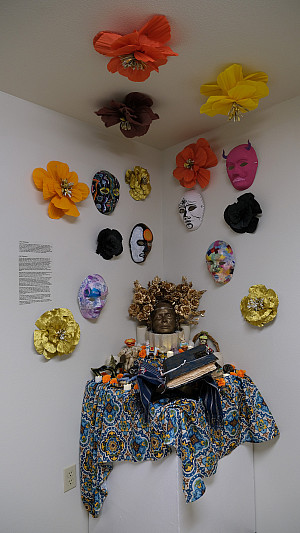
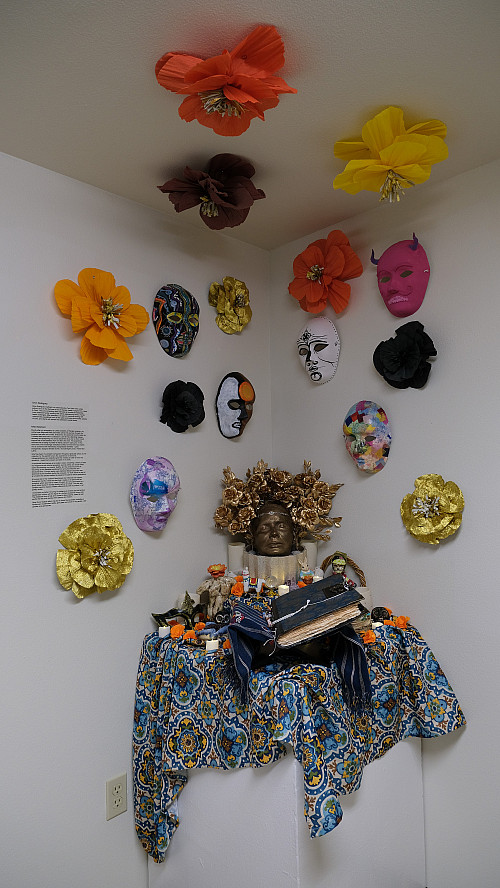
Grief has been my constant companion throughout graduate school, so my collection for this exhibit honors the experiences of personal, intergenerational, and collective grief. By creating an altar to honor my ancestors, I keep them present and alive in my work.
A handmade book serves as a modern codex: presenting a history of both my indigenous and colonial ancestors, journal entries and social media posts documenting my parents’ deaths, and my personal journey to becoming an art therapist practicing from a trauma-informed and decolonial lens. Though nearly every historical Mayan document was destroyed by the Spanish during the conquest, my work stands as part of an ancient and sacred tradition to preserve the past for future generations.
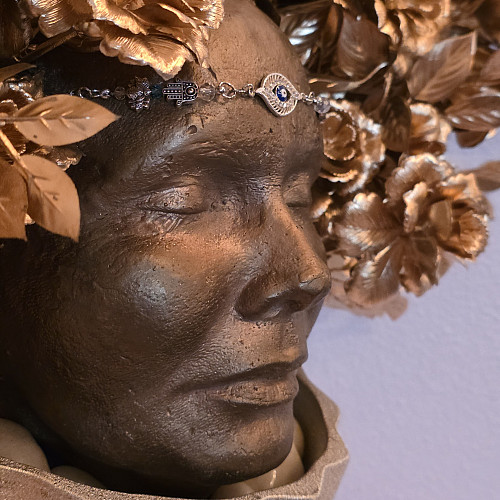
A bronze cast of my mother’s face honors her influence and support throughout my life. It was her wish that I create an art piece with her sculpture, which was lost for nearly 20 years and only discovered by a family friend buried in storage shortly before her death. The altar also contains ceramic objects created collaboratively with my mother in her pottery studio.
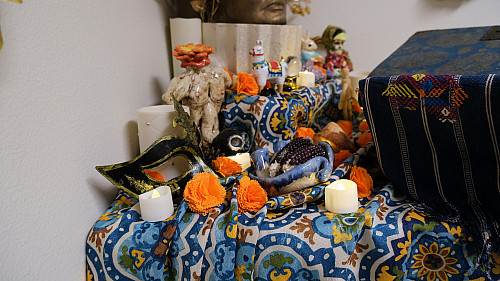
I remember my father, honoring his indigenous ancestry and his family’s Guatemalan culture with the figure of a muñeca quitapena (worry doll). This traditional form of folk art is rooted in Maya legend, meant to help soothe the fear and anxiety of the person who holds it.
Other found objects adorn the altar to honor the deceased, including a handwoven Guatemalan textile, gem glass corn grown in my garden, LED candles, and gemstones.
Sacred Grief
Credit: Orion R.
Sacred Grief
Credit: Orion R.
Sacred Grief
Credit: Orion R.
Sacred Grief
Credit: Orion R.
Sacred Grief
Credit: Orion R.
Sacred Grief
Credit: Orion R.
Orion R.
Art Therapy is located in room 326 of Rogers Hall on the Graduate Campus.


 Sacred GriefCredit: Orion R.
 Sacred GriefCredit: Orion R.
 Sacred GriefCredit: Orion R.
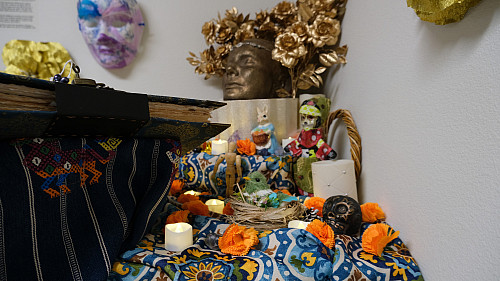 Sacred GriefCredit: Orion R.
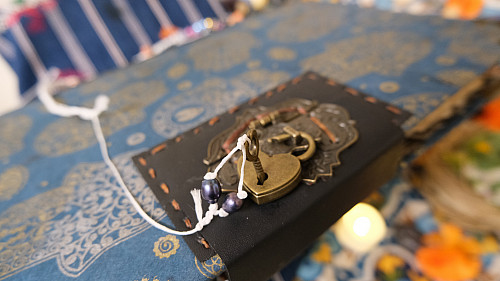 Sacred GriefCredit: Orion R.
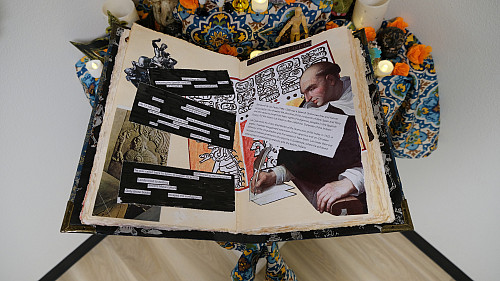 Sacred GriefCredit: Orion R.