
Clean Power Mapping
The Green Energy Institute’s Clean Power Mapping Project is evaluating the current status of Oregon’s clean energy industry, analyzing the policies and politics that led the state to its existing position, and identifying opportunities for future growth and policy advancement in the state.

CLEAN POWER MAPPING PROJECT
Oregon is widely considered a leader in clean energy policy and development, thanks to innovative energy efficiency programs, robust support for renewable energy development, and tremendous renewable energy production potential. In reality, however, Oregon’s renewable energy progress has stagnated, due to rollbacks of key renewable energy policies and growing resistance to invest in the state’s clean energy programs. It is time to reboot Oregon’s policies and develop a long-term plan to guide the state’s transition to a clean energy economy. To accomplish this, Oregon’s clean energy advocates and policymakers must first have a clear understanding of the current status and impact of Oregon’s clean energy economy and a comprehensive assessment of the state’s recent policy successes and mistakes.
The goal of our Clean Power Mapping Project is to support a transition to a 100% renewable energy economy in Oregon by laying the foundation for long-term, comprehensive energy planning. For us to move forward with this energy planning, we must understand where we are and how we got here. To provide this understanding, our project has two primary components: the Clean Energy Jobs Report and the Policy, Politics, and Media Assessment.
Our Clean Energy Jobs Report will provide a comprehensive overview of the current status of Oregon’s clean energy jobs and evaluate the importance of Oregon’s clean energy employment to the state. Our Policy, Politics, and Media Assessment will provide an overview and analysis of the policies, politics, and media coverage that have brought Oregon’s renewable energy industry to its current status and may either advance or impede future renewable energy development.
Clean Power Mapping Jobs Report
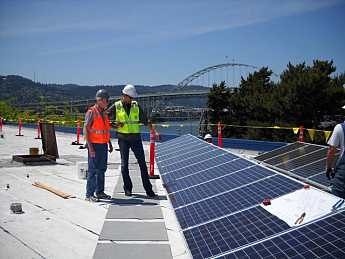

How many companies work in the clean energy industry in Oregon? How many jobs does the industry provide? What are the average salaries for jobs in the clean energy sector? Employment data for the renewable energy sector is surprisingly hard to come by but is vital to making smart policy decisions. Through our Clean Power Mapping Project, GEI is working to document employment-related benefits from the clean energy sector in Oregon. The purpose of this project is to provide a comprehensive, up-to-date summary of the jobs that Oregon’s “clean energy” economy provides in the state.
GEI is leading this project in partnership with the Oregon Environmental Council and in collaboration with Renewable Northwest, the Northwest Environmental Business Council, the Portland Development Commission, Drive Oregon, the Geothermal Energy Association, the Biomass Thermal Energy Council, the Oregon Solar Energy Industries Association, Women of Wind Energy, and other key organizations in the sector.
Clean Power Mapping Policy, Politics, and Media Assessment
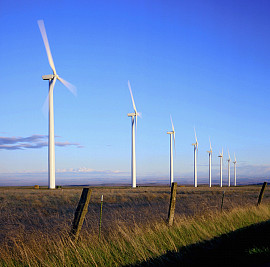

In the mid-2000s, Oregon was a renewable energy policy leader. Under the leadership of then-governor Kulongoski, the state adopted ambitious renewable energy policies that attracted leading renewable energy companies to the state and prompted a surge in wind power development. In recent years, however, renewable energy development has largely stagnated in Oregon, and the state’s current renewable policies are not adequately incentivizing new investment and growth in this industry. For a state with tremendous renewable energy potential, why has Oregon’s progress slowed so dramatically?
GEI’s Policy, Politics, and Media Assessment is evaluating the policies and politics affecting clean energy investment and development in Oregon. This component of our Clean Power Mapping Project is identifying the strengths and weaknesses of Oregon’s prior and existing clean energy policies, examining the politics involved in enacting and rescinding these policies, and evaluating the role that the media has played in weakening political support for renewable energy. Based on our findings, GEI aims to develop targeted policy and media strategies to support Oregon’s clean energy transition.

